

Silver has long been valued for its role in precious-metal ownership, jewelry, industrial applications, and collectibles. For people interested in purchasing physical silver, bullion bars and coins are two of the most common options. Both provide exposure to the value of silver, but they differ in pricing, design, premiums, storage requirements, and resale considerations.
Choosing between silver bullion bars and silver bullion coins depends on what matters most to you. Some buyers prioritize obtaining the greatest amount of silver for their budget, while others prefer recognizable coins that may be easier to identify and trade.
Understanding these differences can help you make a more informed purchase, whether you are buying your first silver product or expanding an existing collection.
What Is Silver Bullion?
Silver bullion refers to physical silver purchased primarily for its precious-metal content rather than decorative or collectible value. It is commonly available as bars, coins, and rounds in different weights and purity levels.
Most investment-grade bullion products contain at least 99.9% silver, although specifications vary by manufacturer and product.
Unlike silver jewelry, whose price may include craftsmanship and design charges, bullion pricing is generally more closely connected to the weight and purity of the silver.
Before purchasing, check the manufacturer’s markings, stated weight, fineness, and product documentation.
1. Silver Bullion Bars: What Makes Them a Good Choice?
Silver bars are popular among buyers who want to acquire physical silver in a straightforward format.
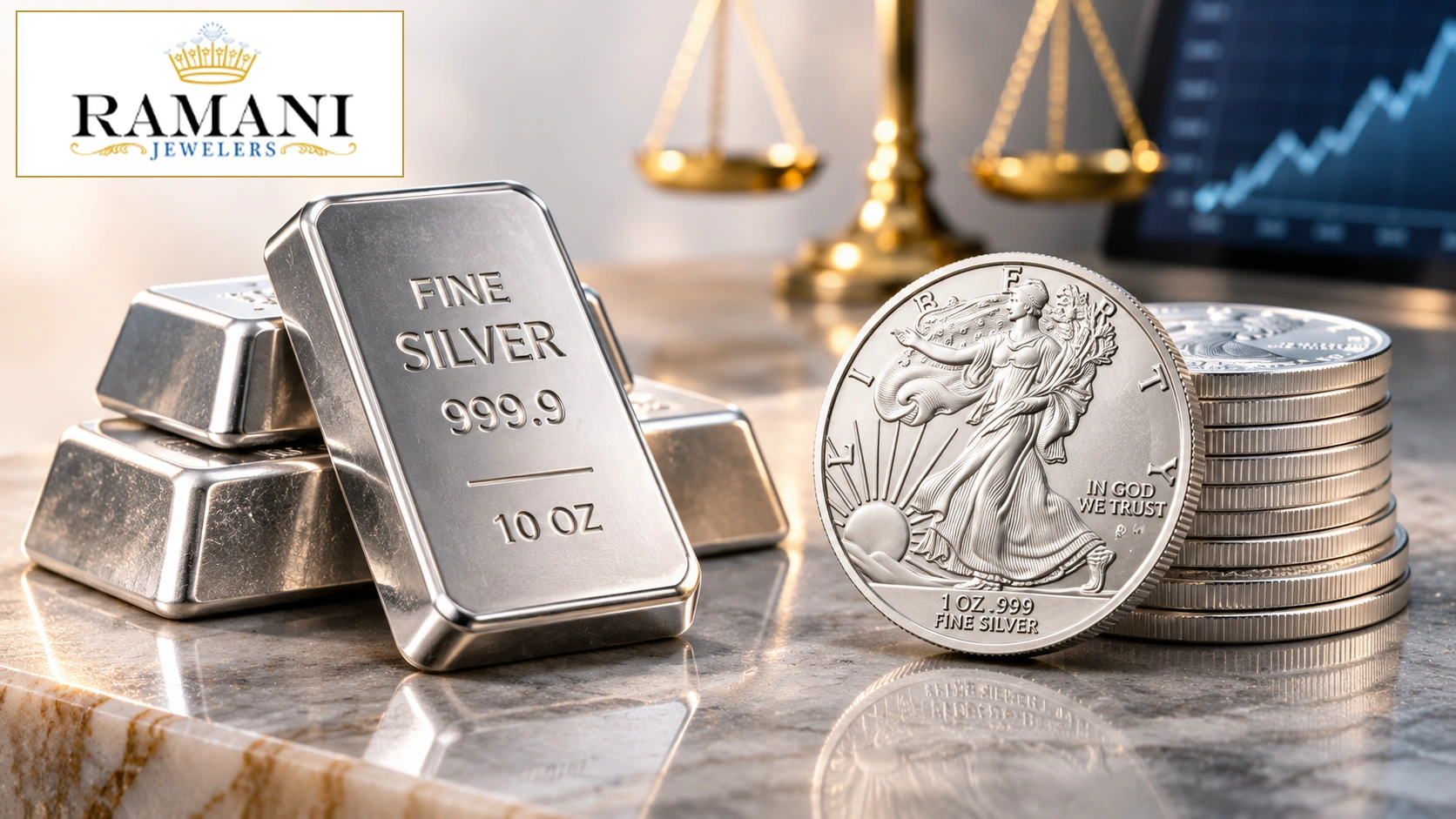
They are available in various sizes, including 1-ounce, 5-ounce, 10-ounce, and larger formats. This flexibility allows buyers to choose products according to their budget and storage preferences.
One potential advantage of bars is their pricing. Larger bullion bars often have lower premiums per ounce than smaller products because manufacturing and distribution costs can be spread across more silver.
However, the actual premium depends on the manufacturer, product availability, market demand, and dealer pricing.
Other advantages include:
- Simple specifications: Bars generally display their weight, purity, and manufacturer.
- Compact storage: Their rectangular shape makes stacking and organizing convenient.
- Flexible purchase sizes: Buyers can select different weights depending on their budget.
- Straightforward metal value: Their value is generally tied closely to their fine-silver content.
If you prefer this format, you can explore the available silver bullion bars at Ramani Jewelers to compare different bullion options.
2. Silver Bullion Coins: Why Do Buyers Prefer Them?
Silver coins offer another way to own physical bullion. Unlike bars, they usually feature detailed designs, official inscriptions, and recognizable mint characteristics.
Some silver bullion coins are produced by government mints and carry a stated face value. Their primary appeal to bullion buyers, however, is generally their precious-metal content rather than their monetary denomination.
One well-known example is the American Silver Eagle 1 oz coin.
Produced by the United States Mint, the American Silver Eagle contains one troy ounce of 99.9% fine silver and carries a face value of one U.S. dollar.
Silver bullion coins may appeal to buyers because of their:
- Recognizable designs and mint markings.
- Standardized weights and stated purity.
- Government-issued status for eligible sovereign coins.
- Convenient individual packaging and handling.
- Established recognition among many precious-metal dealers.
However, buyers should understand that not every silver coin is a bullion coin. Proof coins, commemoratives, and collectible issues may have additional premiums based on their finish, rarity, or collector demand.
You can browse silver bullion coins at Ramani Jewelers to explore this format.
3. Silver Spot Price and Premium: What Is the Difference?
One of the most important concepts to understand before buying bullion is the relationship between the spot price and the retail purchase price.
The silver spot price represents the market benchmark for one troy ounce of silver. It fluctuates according to market conditions, supply and demand, economic developments, and investor activity.
However, physical silver products generally cost more than their underlying metal value.
The difference is called the premium.
The silver spot price and premium together determine the retail price you pay for a particular product.
For example, consider a hypothetical purchase:
| Pricing Component | Amount |
|---|---|
| Silver spot value | $40.00 |
| Dealer premium | $4.00 |
| Total purchase price | $44.00 |
These figures are illustrative and are not current market quotations.
Premiums generally account for manufacturing, minting, packaging, distribution, and dealer operating costs. They may also increase when a particular product experiences higher demand or limited availability.
When comparing products, calculate the total premium rather than looking only at the advertised price.
4. Silver Bars vs. Coins: Which Offers Better Value?
Neither format is automatically better for every buyer.
Silver bars often offer a lower purchase premium per ounce, particularly in larger sizes. This can make them appealing to buyers who prioritize acquiring more physical silver for their budget.
Coins may carry higher premiums because of their minting process, recognizable designs, and demand among bullion buyers and collectors.
Here is a general comparison:
| Comparison Factor | Silver Bars | Silver Coins |
|---|---|---|
| Premium | Often lower per ounce | Often higher |
| Design | Generally simple | Detailed designs |
| Weight options | Wide variety | Standardized denominations |
| Storage | Easy to stack | Usually require careful handling |
| Recognition | Depends on manufacturer | Recognizable mint designs |
| Collectible appeal | Usually limited | May have additional appeal |
| Resale | Depends on brand and market | Depends on coin and demand |
Remember that premiums and resale conditions vary. A popular coin may attract a stronger resale market, but that does not guarantee you will recover its original premium.
5. Check Silver Purity and Authenticity
Purity is an essential consideration when purchasing silver bullion.
Many investment-grade products are marked .999 fine silver, meaning they contain 99.9% pure silver. Some products use .9999 fineness, representing 99.99% purity.
Before buying, check:
- The stated silver purity.
- The product’s exact weight.
- The mint or manufacturer’s identity.
- Any serial number or authentication information.
- Available certificates or original packaging.
For example, an American Silver Eagle contains 99.9% fine silver and weighs one troy ounce.
Do not assume that every product with a silver-colored appearance is genuine bullion. Purchase from reputable sellers and ask about their authenticity verification procedures.
6. Storage and Handling: Bars or Coins?
Physical silver requires appropriate storage, regardless of whether you choose bars or coins.
Bars are generally easier to stack because of their rectangular shape. Larger bars, however, can be less convenient to handle individually when you want to sell or transfer only a smaller quantity.
Coins are usually easier to separate into individual units, but their surfaces may be more susceptible to scratches and handling marks.
For both formats, consider these storage practices:
- Use suitable protective packaging.
- Keep bullion in a dry, secure location.
- Avoid unnecessary handling.
- Maintain purchase receipts and product documentation.
- Consider appropriate insurance for valuable holdings.
Proper storage helps maintain the physical condition of your silver and makes future verification more convenient.
7. Understand Liquidity and Resale Before Buying
Liquidity refers to how easily an asset can be sold or exchanged without significantly affecting its price.
Both silver bars and coins can be resold, but the process depends on product recognition, purity, condition, manufacturer, and local dealer demand.
Widely recognized coins may be easier for some buyers to identify. Standard bullion bars from established manufacturers can also be readily traded through suitable dealers.
Before purchasing, ask potential silver bullion dealers about their buyback policies.
Find out whether they purchase products from other manufacturers, how they verify purity, and how their buying prices compare with the current spot price.
It is also worth understanding the dealer spread: the difference between the price at which a dealer sells silver and the price at which the dealer buys it back.
A lower initial premium does not automatically guarantee a better resale outcome. Compare the complete buying and selling costs.
8. Where Should You Buy Silver Bullion?
Choosing the right seller is just as important as choosing between bars and coins.
A reputable precious-metal seller should provide clear product specifications, transparent pricing, and information about authenticity and available documentation.
Avoid making decisions based solely on unusually low advertised prices. Check whether the product’s purity, weight, manufacturer, and final purchase cost are clearly explained.
Ramani Jewelers provides a destination for customers exploring gold, silver, and jewelry purchases. You can also learn more about the business through its About Us page.
For questions about available silver bullion products, specifications, or purchasing information, you can contact Ramani Jewelers.
You can also explore the store’s FAQ section for additional information and visit the Ramani Jewelers blog for more educational content about precious metals and jewelry.
Final Thoughts: Should You Choose Silver Bars or Coins?
The choice between silver bullion bars and coins ultimately depends on your purchasing priorities.
Bars may be more suitable if your main objective is acquiring physical silver with competitive premiums and convenient storage. Coins may appeal more if you prefer recognizable mint products, standardized denominations, and individual pieces that are easy to handle.
Neither format guarantees a better investment result. Silver prices fluctuate, and premiums, dealer spreads, and resale demand all influence the overall cost of ownership.
Take time to compare weight, purity, premiums, manufacturer reputation, storage requirements, and buyback policies before making your decision.
A well-informed purchase starts with understanding exactly what you are buying and choosing a product that fits your preferences and budget.
FAQs
Are silver bullion bars better than silver bullion coins?
Silver bars often have lower premiums per ounce, particularly in larger weights, making them attractive to buyers focused on acquiring more silver. Coins may offer greater recognition and individual handling convenience. The better option depends on your budget, storage preferences, and resale considerations.
What is the American Silver Eagle 1 oz coin?
The American Silver Eagle is an official United States Mint bullion coin containing one troy ounce of 99.9% pure silver. It carries a face value of one U.S. dollar and is widely recognized among silver bullion buyers.
Why do silver bullion coins cost more than bars?
Coins may carry higher premiums because of their minting costs, detailed designs, packaging, and market demand. Government-issued bullion coins can also attract additional buyer interest. However, premiums vary by product, manufacturer, availability, and dealer.
How do I calculate the premium on silver bullion?
Subtract the underlying spot value of the silver content from the product’s purchase price. For example, if a one-ounce product costs $45 and the spot price is $40 per ounce, the premium is $5. The premium percentage in this example is 12.5%.
What purity should I look for when buying silver bullion?
Many buyers prefer .999 fine silver, which contains 99.9% pure silver. Some products offer .9999 fineness. Always verify the stated purity, actual silver weight, and manufacturer information before purchasing.
Are silver bullion bars and coins easy to resell?
Both formats can be resold through reputable precious-metal dealers. Resale value depends on silver spot prices, product recognition, condition, purity verification, and dealer buyback policies. Compare the dealer’s buying and selling prices before purchasing to understand the potential spread.