

Old gold jewelry often carries two kinds of value: its financial worth and its personal significance. An unused gold necklace, an inherited bracelet, a broken chain, or a pair of unmatched earrings may represent an opportunity to receive cash. However, some pieces may be worth considerably more than their gold content because of their craftsmanship, gemstones, brand, or history.
If you are searching for sell gold jewelry near me in Dallas, TX, understanding how buyers evaluate gold can help you make a better decision. Before accepting an offer, it is important to know whether your jewelry should be valued as scrap gold, assessed as a finished piece, or kept as a family heirloom.
This guide explains what affects gold resale value, how professional appraisals work, and what to consider before selling your old jewelry.
1. Understand What Your Old Gold Jewelry Is Worth
The value of old gold jewelry depends on several factors, and the original purchase price is not necessarily what you will receive when selling it.
Most gold buyers consider three primary factors:
- Gold purity: The karat determines how much actual gold the item contains.
- Net gold weight: The amount of gold after accounting for stones and other non-gold components.
- Current gold market price: The prevailing market rate influences the underlying metal value.
For example, 24K gold contains approximately 99.9% pure gold, while 22K contains approximately 91.6%, 18K contains 75%, and 14K contains approximately 58.5%.
A buyer generally uses these specifications to estimate the gold content and calculate its preliminary metal value. The final offer may be lower because of refining costs, operating expenses, and the buyer’s margin.
Understanding these factors helps you evaluate whether an offer is reasonable instead of accepting the first amount presented.
2. Jewelry Value vs. Scrap Gold Value
One of the biggest mistakes people make when selling old gold is assuming every piece should be valued only by its weight.
Scrap gold value refers primarily to the recoverable precious metal in an item. However, finished jewelry may have additional value based on its design, condition, brand, gemstones, rarity, or craftsmanship.
Consider these examples:
Old gold chain: A plain, damaged chain without distinctive design features may be valued mainly for its gold content.
Designer gold ring: A branded ring in good condition may have additional resale value beyond its metal content.
Antique necklace: An older necklace featuring unusual craftsmanship or historical significance may appeal to collectors.
Diamond gold earrings: The diamonds may have separate value that should be considered during an appraisal.
This is why you should not automatically accept a scrap-gold offer for every piece. Ask whether the buyer evaluates finished jewelry separately before deciding how to sell it.
Some pieces may be jewelry worth more than scrap gold, particularly when they have desirable designs, valuable gemstones, or collectible characteristics.
3. Should You Sell Broken or Damaged Gold Jewelry?
Yes. Broken gold jewelry can still have financial value even when it cannot be worn.
A damaged chain, bent ring, single earring, missing clasp, or outdated bracelet may still contain valuable gold. Its physical condition does not automatically eliminate the value of the precious metal.
People searching for sell broken gold jewelry often assume that their damaged pieces are useless. In reality, gold buyers can assess many items regardless of their condition.
Before throwing away unwanted jewelry, collect everything together and have it evaluated.
However, do not automatically sell a damaged designer or antique piece as scrap. Its original components or craftsmanship may still have resale value. Getting an evaluation before making a decision can help you avoid overlooking that possibility.
4. When Should You Get a Professional Gold Jewelry Appraisal?
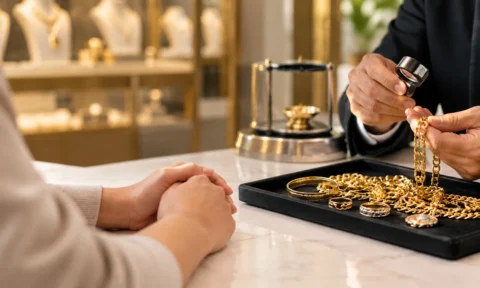
A professional gold jewelry appraisal can help you understand whether an item is worth selling based on its metal content or whether it deserves further evaluation as a finished piece.
An appraisal may consider:
- Gold purity and total weight.
- Gemstone type, quality, and condition.
- Brand or designer identification.
- Craftsmanship and design.
- Antique or collectible characteristics.
- Overall condition and resale potential.
One important distinction is that an insurance appraisal and a cash-buying offer are not necessarily the same.
An insurance appraisal may estimate the cost of replacing an item with a comparable piece. A buyer’s offer, on the other hand, reflects what the buyer is willing to pay in the current resale or precious-metal market.
Therefore, do not assume that an insurance valuation represents the amount you can receive when selling your jewelry.
5. How to Find Where to Sell Gold Jewelry Near Me in Dallas
When searching for where to sell gold jewelry near me, choosing the right buyer is just as important as understanding the value of your gold.
Dallas-area sellers have several options, including jewelry stores, specialist gold buyers, precious-metal dealers, and online gold-buying services.
Before selecting a buyer, look for transparency and a clearly explained evaluation process.
Here are a few things to check:
Transparent weighing: The buyer should explain how your jewelry is weighed and whether gemstones or non-gold components are excluded from the gold weight.
Purity testing: Ask how the gold’s karat is determined. Different pieces in the same collection may have different purity levels.
Clear pricing: The buyer should explain how the current gold rate, purity, weight, and applicable deductions influence the offer.
No-pressure evaluation: You should have the opportunity to understand the offer before deciding whether to accept it.
Proper documentation: Ask for a clear transaction record when you complete a sale.
For people looking to sell gold jewelry in Dallas, working with an established local jewelry business can make it easier to discuss the condition, purity, and potential value of individual pieces.
You can explore the gold-buying services offered by Ramani Jewelers to learn more about selling unwanted gold jewelry.
6. How Gold Purity and Weight Affect Your Offer
Gold purity has a direct effect on how much actual gold an item contains.
For example, two necklaces may weigh exactly the same but have different values because one is 22K and the other is 14K.
Consider a hypothetical comparison:
| Gold Purity | Gold Content | Jewelry Weight |
|---|---|---|
| 22K | Approximately 91.6% | 10 grams |
| 18K | 75% | 10 grams |
| 14K | Approximately 58.5% | 10 grams |
Although the pieces have identical weights, the 22K necklace contains considerably more pure gold.
A buyer generally calculates the estimated fine-gold content before applying the relevant market rate and purchase terms.
Also remember that stones, clasps made from other metals, and decorative components can affect the final gold weight. Ask for a breakdown instead of relying only on the total weight displayed on a scale.
7. Should You Sell or Keep Inherited Gold Jewelry?
This decision requires more thought than selling an ordinary unused piece.
Inherited jewelry may have sentimental, cultural, or family significance that cannot be measured through its gold content.
A necklace passed down through generations, a wedding bracelet, or jewelry associated with an important family occasion may be worth keeping even if it is no longer fashionable.
Before selling inherited jewelry, consider:
- Does the piece have sentimental or historical significance?
- Is it a unique design that may be difficult to replace?
- Are other family members emotionally attached to it?
- Could it be redesigned or passed down to another generation?
- Does its financial value justify selling it?
If you are unsure, consider obtaining an appraisal first. You can understand the potential financial value without committing to a sale.
Another option is to keep the original piece and explore whether it can be repaired or redesigned into something you would wear.
8. What Can You Do With the Money After Selling Gold?
Once you sell unwanted gold jewelry, you may want to put the proceeds toward another financial or personal goal.
Some people use the money for household expenses, important purchases, or savings. Others prefer to purchase a different form of physical gold.
For example, buyers interested in holding physical gold rather than wearing jewelry may explore bullion products. You can browse the gold bullion collection at Ramani Jewelers to learn about available options.
Keep in mind that bullion and jewelry have different pricing structures. Jewelry prices may include craftsmanship and design costs, while bullion pricing is generally more directly connected to gold weight, purity, and dealer premiums.
9. Why Choose a Trusted Gold Buyer?
Selling gold is a transaction that requires confidence in the evaluation process. A buyer should provide clear information about purity, weight, pricing, and the factors affecting the final offer.
Ramani Jewelers provides jewelry-related services for customers interested in buying and selling gold. You can learn more about the business through its About Us page.
If you have questions about an item or want to understand the evaluation process before visiting, you can contact Ramani Jewelers.
You can also review the store’s Frequently Asked Questions for additional information about jewelry and its services.
For more educational information about gold, jewelry, and buying considerations, visit the Ramani Jewelers blog.
Final Thoughts
Deciding whether to sell old gold jewelry is not always straightforward. While some pieces are better valued for their gold content, others may have additional worth because of their craftsmanship, gemstones, brand, or sentimental importance.
Before searching for sell gold jewelry near me, take time to understand your jewelry’s purity, weight, condition, and potential resale value. Consider a professional evaluation, compare offers, and make sure the buyer explains how the final amount is calculated.
Most importantly, do not rush to sell a piece that holds significant personal or family meaning. A little research can help you distinguish between jewelry that makes sense to sell and pieces worth keeping for the next generation.
FAQs
Where can I sell gold jewelry near me in Dallas, TX?
You can sell gold jewelry through established jewelry stores, specialist gold buyers, and precious-metal dealers. Look for a buyer who provides transparent weighing, purity testing, clear pricing, and a detailed explanation of the offer. Ramani Jewelers provides gold-buying information for customers in the Dallas area.
Can I sell broken or damaged gold jewelry?
Yes. Broken chains, damaged rings, unmatched earrings, and necklaces with missing clasps can still contain valuable gold. Their condition may affect resale options, but the gold content can retain value. Have damaged or unusual designer pieces evaluated separately before accepting a scrap-gold offer.
How is the value of old gold jewelry calculated?
Gold value generally depends on the item’s net gold weight, karat purity, and current gold market price. Buyers may also account for refining costs, processing expenses, and their purchase margin. Gemstones and other non-gold components are typically considered separately.
Is old gold jewelry worth more than its scrap value?
Sometimes. Designer jewelry, antique pieces, items with valuable gemstones, and distinctive handcrafted designs may have additional resale or collectible value. An appraisal can help determine whether selling the piece as finished jewelry makes more sense than selling it for its gold content alone.
Should I clean my gold jewelry before selling it?
Light surface cleaning is generally sufficient, but avoid harsh chemicals, abrasive materials, or aggressive polishing. These can potentially damage gemstones or delicate components. It is usually better to have the jewelry evaluated in its existing condition rather than risking damage while trying to make it look newer.
Do I need a receipt to sell old gold jewelry?
An original purchase receipt is not always required, but requirements vary by buyer and transaction. Keep any available invoices, certificates, appraisals, or gemstone documentation because they may help establish the item’s background and specifications. Be prepared to provide identification if the buyer or applicable regulations require it.