


Buying physical gold is an important purchase, whether you are adding bullion to your existing collection, diversifying your assets, or purchasing gold for long-term ownership. Among the available bullion options, a gold bar 1 oz is a popular format because it offers a standardized weight, substantial gold content, and convenient storage.
However, not every gold bar offers the same specifications, documentation, or purchasing value. Purity, refinery reputation, assay certificates, pricing premiums, and resale policies all deserve attention before making a decision.
This guide explains what to compare when you plan to buy a 1 oz gold bar so you can understand the product, verify its specifications, and make a more informed purchase.
What Is a 1 oz Gold Bar?
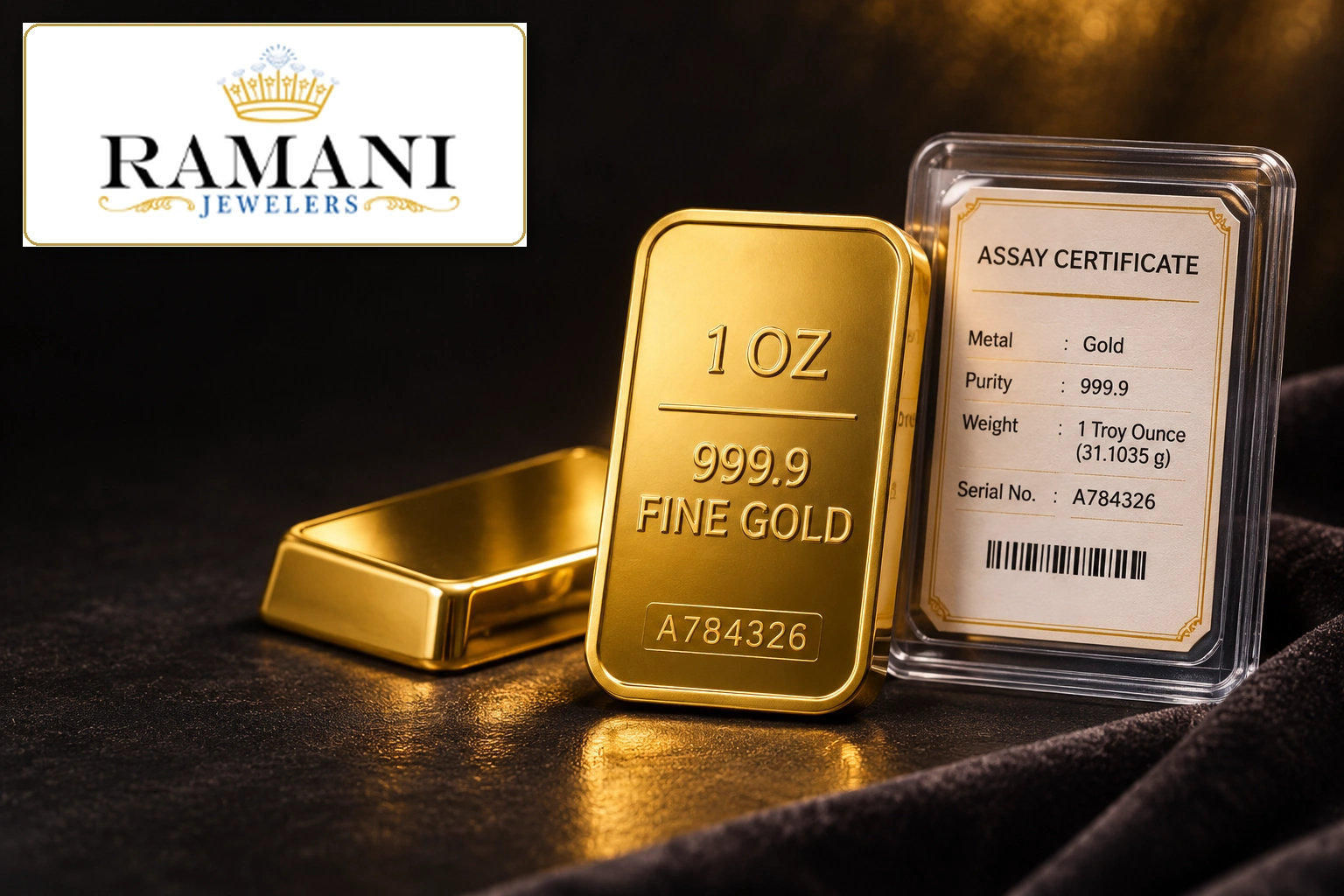
A 1 oz gold bar is a physical bullion product containing one troy ounce of gold. A troy ounce weighs approximately 31.1035 grams and is the standard unit used to measure and price precious metals.
Unlike gold jewelry, which may include craftsmanship charges and decorative elements, bullion bars are primarily valued according to their weight, purity, and the current market price of gold.
A standard 1 ounce gold bar is often available in a compact rectangular design. Depending on the manufacturer, it may have a polished, minted, or cast finish.
One-ounce bars are appealing because they provide a recognizable quantity of gold without requiring buyers to purchase a much larger bullion bar.
You can explore the available options in Ramani Jewelers’ gold bar collection to compare bullion products and their specifications.
1. Check the Gold Purity Before Purchasing
Gold purity should be one of your first considerations.
Most investment-grade gold bars are manufactured using high-purity gold, commonly marked as 999 or 999.9 fineness.
A marking of 999.9 fine gold means that the bar contains 99.99% pure gold. This is an important specification for buyers who want to understand exactly how much precious metal they are purchasing.
Common gold purity markings include:
- 999.9: 99.99% pure gold
- 999: 99.9% pure gold
- 995: 99.5% pure gold
When comparing products, look for a clearly stated purity marking such as 999.9 fine.
A gold bar 999.9 fine is particularly attractive to buyers seeking a high-purity bullion product. However, a lower fineness marking does not automatically mean a bar is counterfeit or unsuitable. The key is to understand its actual gold content and compare products accurately.
Also, remember that weight and purity work together. A bar’s gross weight and its fine gold content are not necessarily identical.
2. Understand the Importance of a Gold Bar Assay Certificate
An assay certificate is an important document associated with many investment-grade gold bars.
It provides information about the bar’s specifications and helps establish its stated authenticity and purity.
A gold bar assay certificate or assay card commonly includes details such as:
- Refiner or manufacturer name
- Gold purity or fineness
- Bar weight
- Unique serial number, where applicable
- Assayer or certification information
Many minted gold bars are supplied inside sealed protective packaging that incorporates the assay information. This packaging can help protect the bar and make its specifications easier to verify.
When purchasing, check whether the serial number on the bar matches the number printed on its accompanying assay card, when both are provided.
Do not treat a loose certificate as conclusive proof of authenticity. The seller, manufacturer, serial number, packaging, and available verification methods should all be considered together.
It is also sensible to retain the original packaging and invoice after purchasing.
3. Compare Gold Bar Premium and Spot Price
One of the most important parts of buying bullion is understanding the difference between the gold spot price and the actual retail price.
The spot price represents the current market benchmark for gold, generally quoted per troy ounce.
However, physical gold bars are usually sold above the spot price.
This additional amount is known as the premium.
The gold bar premium and spot price together determine what you actually pay for a physical bullion product.
A dealer’s premium may account for refining, manufacturing, packaging, distribution, and operating costs. It can also vary depending on the manufacturer, availability, and market conditions.
For example, consider a hypothetical purchase:
- Gold spot value: $3,000
- Dealer premium: $75
- Total purchase price: $3,075
These figures are only an illustration, not a current gold quotation.
When comparing two gold bars, do not simply choose the one with the lower advertised price. Compare their weight, purity, manufacturer, documentation, and total premium.
The Royal Canadian Mint also explains that bullion premiums reflect factors such as distribution, fabrication, and dealer fees.
4. Choose a Recognized Manufacturer or Refinery
The manufacturer is another important consideration.
Gold bars are produced by different refiners and precious-metal manufacturers around the world. Their products may differ in design, finishing, packaging, and recognition among bullion dealers.
Before buying, investigate the manufacturer’s background and reputation.
Consider the following:
- Is the manufacturer identifiable?
- Are weight and purity clearly stamped?
- Is the serial number included where applicable?
- Does the product come with appropriate documentation?
- Can the seller explain how authenticity can be verified?
Some buyers also look for manufacturers associated with recognized precious-metal industry standards.
However, avoid assuming that every one-ounce product qualifies as an LBMA Good Delivery bar. LBMA Good Delivery specifications apply to substantially larger wholesale gold bars. Manufacturer accreditation and the specifications of the individual product are separate considerations.
5. Check the Resale and Buyback Policy
Buying gold is only one part of owning physical bullion. Understanding how you might sell it later is equally important.
Before completing your purchase, ask the seller about its buyback policy.
Important questions include:
- Does the seller purchase gold bars originally sold by other dealers?
- Is the original invoice required?
- Does the assay packaging need to remain intact?
- How is the gold’s value calculated during resale?
- Are testing or processing charges applicable?
- How does the buyback price compare with the current spot price?
Remember that the retail premium you pay when purchasing a gold bar may not be recovered when selling it.
The difference between a dealer’s selling price and buying price is commonly called the spread. This difference can affect your actual resale proceeds.
Keeping the original invoice, packaging, and assay documentation may make future verification and resale easier.
6. Verify the Seller Before You Buy
A genuine-looking gold bar and an attractive price are not enough to guarantee a reliable purchase.
Always consider the credibility of the seller. Look for transparent product descriptions, clearly disclosed pricing, proper invoices, and accessible customer support.
Be cautious about unusually low prices, vague purity claims, missing documentation, or sellers who cannot explain their authenticity verification process.
A trustworthy jeweler should be able to answer reasonable questions about the bullion product without making you feel pressured to purchase.
Ramani Jewelers provides a destination for customers exploring gold and jewelry purchases. You can also learn more about the business through its About Us page.
If you have questions about available bullion products, specifications, or purchasing information, you can contact Ramani Jewelers.
7. Consider Storage and Long-Term Ownership
Once you purchase a physical gold bar, protecting it becomes your responsibility.
Gold bars are compact, but their value makes proper storage important.
Keep the bar in a secure location with restricted access. Avoid unnecessary handling, particularly when the product comes in sealed assay packaging.
For long-term ownership, consider secure storage options such as a suitable home safe or a professional precious-metal storage facility.
You should also retain digital and physical copies of your purchase invoice and relevant product documents.
If you intend to insure your bullion, check the policy conditions carefully. Not every standard household insurance policy automatically provides sufficient coverage for precious metals.
Good storage practices help protect the physical condition and documentation associated with your purchase.
Final Checklist Before Buying a 1 oz Gold Bar
Before completing your purchase, review these essential points:
- Weight: Confirm that the product contains one troy ounce of gold.
- Purity: Check whether the bar is marked 999 or 999.9 fine.
- Manufacturer: Verify the refiner’s identity and reputation.
- Assay certificate: Check the documentation and matching serial number, where applicable.
- Pricing: Compare the spot price, retail premium, and final purchase cost.
- Resale: Understand the seller’s buyback terms and applicable price spread.
- Storage: Plan how you will protect the bar and retain its documentation.
Taking time to verify these details can help prevent avoidable purchasing mistakes.
FAQs
How much does a 1 oz gold bar weigh?
A one-ounce gold bullion bar is measured using the troy ounce system. One troy ounce equals approximately 31.1035 grams. This is different from the standard household ounce, which weighs approximately 28.35 grams.
What does 999.9 fine gold mean?
999.9 fine gold means the product contains 99.99% pure gold. It is a common purity specification for investment-grade bullion bars. Buyers should check the fineness marking and accompanying product documentation before purchasing.
Is an assay certificate necessary when buying a gold bar?
An assay certificate provides useful information about the manufacturer’s identity, gold purity, weight, and other product specifications. Although documentation formats vary between manufacturers, buyers should always request appropriate verification and retain their original purchase invoice.
Why does a 1 oz gold bar cost more than the spot price?
The spot price represents the market value of gold, while the retail price of a physical bar generally includes an additional premium. This can cover refining, manufacturing, packaging, distribution, and dealer costs. The premium varies by product and market conditions.
Can I sell my 1 oz gold bar later?
Yes, physical gold bars can generally be sold through bullion dealers, precious-metal buyers, and other eligible purchasers. The amount you receive depends on current gold prices, purity, verification, dealer policies, and the buyback spread. Keeping the original invoice and assay documentation can make the process easier.
Should I keep the original assay card and packaging?
Yes. Keeping the original assay card and protective packaging is a sensible practice. They help preserve the product’s identifying information and may simplify authenticity checks during a future resale. Always confirm whether your prospective buyer has specific packaging requirements.
Make an Informed Gold Purchase with Ramani Jewelers
Purchasing a one-ounce gold bar requires more consideration than simply checking its price. Purity, manufacturer reputation, assay documentation, premiums, and resale conditions all contribute to the overall value of your purchase.
Whether you are considering your first 1 oz gold bar or adding another bar to an existing collection, understanding these factors helps you evaluate available products more confidently.
Explore Ramani Jewelers’ gold bar collection to learn more about available options. You can also visit the Ramani Jewelers blog for additional information about gold, jewelry, and purchasing considerations.
A well-informed purchase starts with checking the details, comparing the complete cost, and choosing a seller who provides clear product information.