


Gold bullion has long been considered a tangible way to diversify a portfolio, preserve purchasing power, and own a physical precious metal. Yet for someone buying gold for the first time, the process can feel confusing. There are different weights, purities, products, premiums, dealers, and payment considerations to understand before making a purchase.
Learning how to buy gold bullion starts with understanding what you are actually purchasing and knowing how to evaluate a dealer and the product. Whether you are considering gold bars, gold coins, or a smaller purchase to get started, a little preparation can help you make a more informed decision.
This gold bullion for beginners guide explains the basics in straightforward terms, from choosing the right product to finding a reputable source in Dallas, Texas.
What Is Gold Bullion?
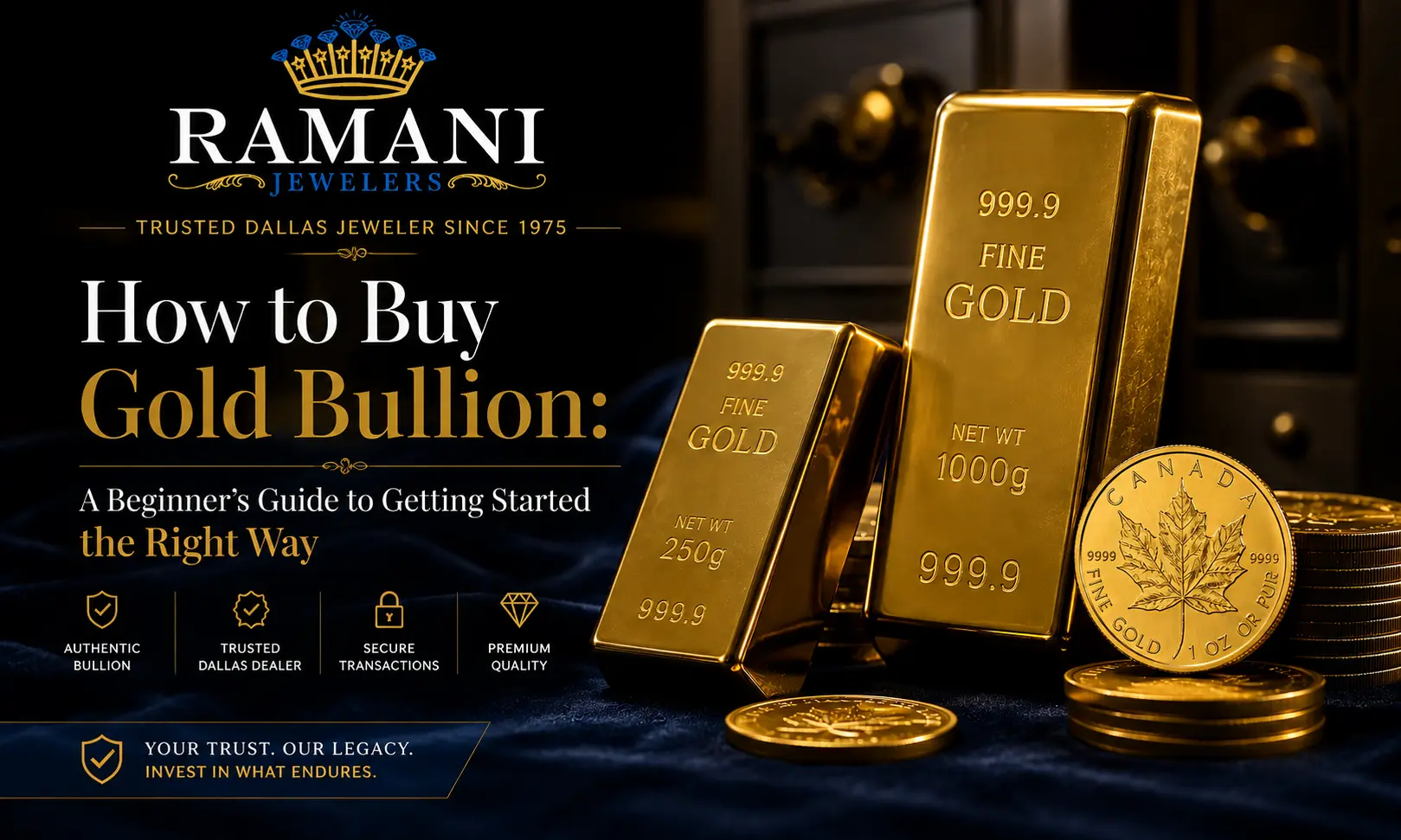
Gold bullion refers to gold that is valued primarily for its precious-metal content rather than its collectible or decorative value. Bullion is commonly sold as bars and coins and is typically produced to a recognized standard of purity and weight.
Investment-grade gold is often highly pure, such as 99.9% or 99.99% gold, depending on the product and manufacturer. The value of bullion generally reflects the current spot price of gold, along with the dealer’s premium and other transaction costs.
Before purchasing, check the product specifications carefully. Weight, purity, brand or mint, and authentication details are all important when evaluating bullion.
For shoppers interested in expanding beyond bullion, Ramani Jewelers’ collections also include jewelry and other fine pieces.
Why Do People Buy Gold Bullion?
People purchase gold bullion for different reasons. Some want a tangible asset they can hold directly, while others are interested in diversification or long-term wealth preservation.
Physical gold also differs from financial assets because it does not depend on a company’s earnings or a particular financial institution to have value. However, gold prices can fluctuate, and physical bullion has costs associated with buying, storing, insuring, and eventually selling it.
The right approach depends on your financial objectives, risk tolerance, budget, and investment horizon. Gold should generally be viewed as one part of a broader financial strategy rather than a guaranteed source of profit.
How to Buy Gold Bullion: Step-by-Step
1. Decide Why You Are Buying
Start by defining your goal. Are you buying gold as a long-term store of value, adding diversification to your holdings, or simply beginning to accumulate physical precious metal?
Your objective can influence the type and size of bullion you choose. A first-time buyer with a limited budget may prefer smaller pieces, while someone purchasing for long-term holding may consider larger bars.
Establishing your budget before shopping can also make it easier to avoid buying more than you intended.
2. Understand Gold Purity and Weight
Gold bullion is commonly sold by weight, including grams, ounces, and fractional-ounce sizes. Purity is another critical factor.
For example, a product marked .999 gold contains 99.9% gold, while .9999 gold contains 99.99% gold. Always review the exact specifications instead of assuming that every gold product has the same purity.
Weight affects the amount of gold you own, while purity indicates how much of that weight is actually gold.
3. Compare Gold Bars vs Gold Coins Investment Options
One of the most common beginner questions concerns gold bars vs gold coins investment choices.
Gold bars are often available in a wide range of sizes. Depending on the manufacturer and weight, bars can provide a straightforward way to purchase a specific amount of gold.
Gold coins may offer additional flexibility because they can be sold individually and are available in widely recognized bullion formats. However, some coins can carry higher premiums because of minting costs, design, or market demand.
Neither format is automatically better for every buyer. Compare the total purchase price relative to the amount of gold contained in the product, along with your intended holding period and resale preferences.
4. Learn About the Gold Premium
The spot price is the market price commonly quoted for gold, but that is not necessarily the price you will pay for physical bullion.
Dealers generally charge a premium above the spot price. This can reflect manufacturing, refining, minting, distribution, inventory, and business costs. Premiums can vary by product and size.
When comparing products, look at the final price rather than focusing only on the advertised spot price.
A slightly larger bar, for instance, may have a lower premium per ounce than several smaller pieces. On the other hand, smaller products may be easier to purchase gradually or sell individually.
5. Determine the Gold Bullion Minimum Purchase
A gold bullion minimum purchase can vary depending on the dealer, product, availability, and transaction structure. Some dealers offer very small bullion products, while others may have purchasing requirements for certain orders.
Ask about minimum quantities, available weights, payment methods, shipping or pickup terms, and any transaction fees before completing your purchase.
For many beginners, starting with an amount that fits comfortably within their budget is more practical than stretching financially just to purchase a larger piece.
Where to Buy Gold Bullion in Dallas
Choosing the right seller is one of the most important parts of the buying process. A search for where to buy gold bullion Dallas should focus on dealer reputation, transparency, product authenticity, and customer service rather than price alone.
A reputable dealer should clearly identify the bullion product, weight, purity, and pricing. The seller should also be willing to explain the product and answer reasonable questions about authenticity and resale.
Ramani Jewelers provides a dedicated bullion collection for customers exploring physical precious metals. Buyers can review the available selection and determine which products align with their objectives and budget.
For additional information about the business and its broader jewelry selection, visit Ramani Jewelers.
How to Identify an Authentic Gold Bullion Dealer
Finding an authentic gold bullion dealer Dallas TX buyers can trust requires more than simply choosing the lowest advertised price.
Look for a dealer that provides clear product information, transparent pricing, and a professional purchasing process. The bullion should come from recognized sources, and product markings or documentation should be consistent with the item being sold.
Before purchasing, consider asking:
- What is the bullion’s exact weight and purity?
- Who manufactured or minted the product?
- What premium is included in the price?
- Are there additional transaction or delivery charges?
- What are the dealer’s policies for returns or exchanges?
- What options are available if I want to sell the bullion later?
A professional dealer should be able to address these questions without creating unnecessary pressure to buy immediately.
Check the Product Before Completing the Purchase
Once you have selected a bullion product, carefully review the description and final price.
Check the weight, purity, manufacturer or mint, and any identification numbers or packaging information provided. If the product comes with an assay card or other authenticity documentation, keep it with the bullion and store the documentation securely.
Do not rely solely on appearance. Gold-colored metals and counterfeit bullion can look convincing, which is why purchasing from an established dealer is important.
Your purchase receipt should also be retained. Good records can help with future resale, insurance, taxation, and personal financial tracking.
Think About Storage Before You Buy
Physical gold requires secure storage. Your storage choice should reflect the value of your holdings and your comfort level.
Some owners keep smaller quantities in a secure location at home. Others consider a bank safe-deposit box or professional precious-metals storage. Each option has different tradeoffs involving access, security, cost, and insurance.
As your bullion holdings grow, storage becomes increasingly important. Purchasing gold without having a plan for protecting it can create unnecessary risk.
When Is the Best Time to Buy Gold?
There is no guaranteed way to identify the perfect time to purchase gold. Gold prices can move in response to inflation expectations, interest rates, currency movements, economic conditions, geopolitical developments, and investor demand.
Rather than attempting to predict every short-term price movement, many buyers focus on their long-term objectives and purchase within a predetermined budget.
A disciplined strategy may be more practical than making decisions based solely on headlines or short-term price fluctuations.
Start Small and Learn as You Go
A beginner does not need to start with a large purchase. Buying a manageable amount can give you an opportunity to learn about bullion products, pricing, storage, and resale without committing too much capital immediately.
As you become more familiar with the market, you can evaluate different weights, brands, and product formats.
Ramani Jewelers also offers other categories for shoppers exploring fine jewelry and precious stones, including new arrivals, diamonds, gemstones, and engagement and wedding jewelry.
Gold Bullion Buying Mistakes to Avoid
New buyers can make avoidable mistakes when they focus too heavily on price or rush into a purchase.
Avoid buying bullion without confirming its weight and purity. Do not assume the cheapest listing is automatically the best value, because premiums and product specifications can differ.
It is also important not to overlook storage. Physical precious metals should be protected from theft, loss, and damage.
Finally, avoid purchasing from an unfamiliar seller simply because the offer appears significantly cheaper than comparable products. An unusually low price should prompt additional questions rather than an immediate purchase.
What to Consider Before Your First Gold Purchase
Before placing your first order, review your budget and confirm that you understand the product you are buying. Compare the total cost, not just the gold spot price.
Consider whether you prefer bars or coins, what weight makes sense for your budget, where you will store the bullion, and how you might sell it in the future.
For Dallas-area buyers, working with a knowledgeable local jeweler or bullion dealer can also make it easier to ask questions and understand the purchasing process in person.
Building a Long-Term Bullion Strategy
Buying gold bullion can be a gradual process. You do not need to purchase everything at once.
Some buyers choose to accumulate smaller amounts over time, while others make larger purchases less frequently. The key is to have a strategy that matches your financial circumstances rather than following market excitement.
Keep records of purchase dates, product weights, premiums, and total costs. This information can make it easier to evaluate your holdings over time and make informed decisions about future purchases.
If you are also interested in selling existing gold, you can learn more through Ramani Jewelers’ gold buyers service.
Explore Gold Bullion at Ramani Jewelers
Understanding how to buy gold bullion is the first step toward making more informed decisions about physical gold. By learning the differences between bars and coins, understanding premiums, verifying authenticity, choosing a reputable dealer, and planning for secure storage, beginners can approach their first purchase with greater confidence.
For Dallas-area shoppers, Ramani Jewelers offers a dedicated bullion collection alongside a wider range of jewelry and precious-stone products.
You can also explore sale items and gifts when shopping for other fine jewelry options.
FAQs
Is gold bullion a good investment for beginners?
Gold bullion can be one way to diversify assets and own physical precious metal, but it is not risk-free. Gold prices can rise or fall, and physical ownership includes premiums, storage costs, and possible selling costs. Beginners should consider gold within the context of their overall financial goals.
What is the easiest gold bullion to buy for a beginner?
There is no single best product for every buyer. Small gold bars and widely recognized bullion coins are common starting points because they allow buyers to purchase smaller quantities. Compare purity, weight, premium, and liquidity before choosing a product.
How much gold bullion should I buy?
The appropriate amount depends on your budget, financial objectives, risk tolerance, and overall asset allocation. A beginner should generally avoid committing money needed for essential expenses. Starting with a manageable purchase can help you learn the process before increasing your holdings.
Where can I buy authentic gold bullion in Dallas, TX?
Look for an established dealer that provides clear information about bullion weight, purity, manufacturer, pricing, and purchasing terms. Dallas buyers can explore the Ramani Jewelers bullion collection and speak with the team about available products.
Do gold bars or gold coins have better value?
Neither is universally better. Bars may offer competitive premiums at certain weights, while coins can provide flexibility and broad recognition. Compare the premium, product specifications, purchase price, and potential resale considerations before deciding between bars and coins.
What is the minimum amount of gold bullion I can buy?
The minimum depends on the dealer and the products available. Smaller bars and fractional bullion products may allow beginners to start with a lower purchase amount. Ask the dealer about available weights and any minimum order requirements before buying.
How can I tell if gold bullion is authentic?
Start by purchasing from a reputable dealer and verifying the product’s stated weight, purity, manufacturer, and documentation. Professional testing methods can also be used to authenticate bullion when appropriate. Avoid relying on visual appearance alone, especially when purchasing from unfamiliar sources.
Where should I store gold bullion after buying it?
Gold should be stored somewhere secure and protected against theft, loss, and damage. Depending on the value of your holdings, options may include a secure home storage solution, a bank safe-deposit box, or professional precious-metals storage. Consider both security and insurance when choosing where to keep it.